
3 nights · Rainforest
Ngaga Lodge
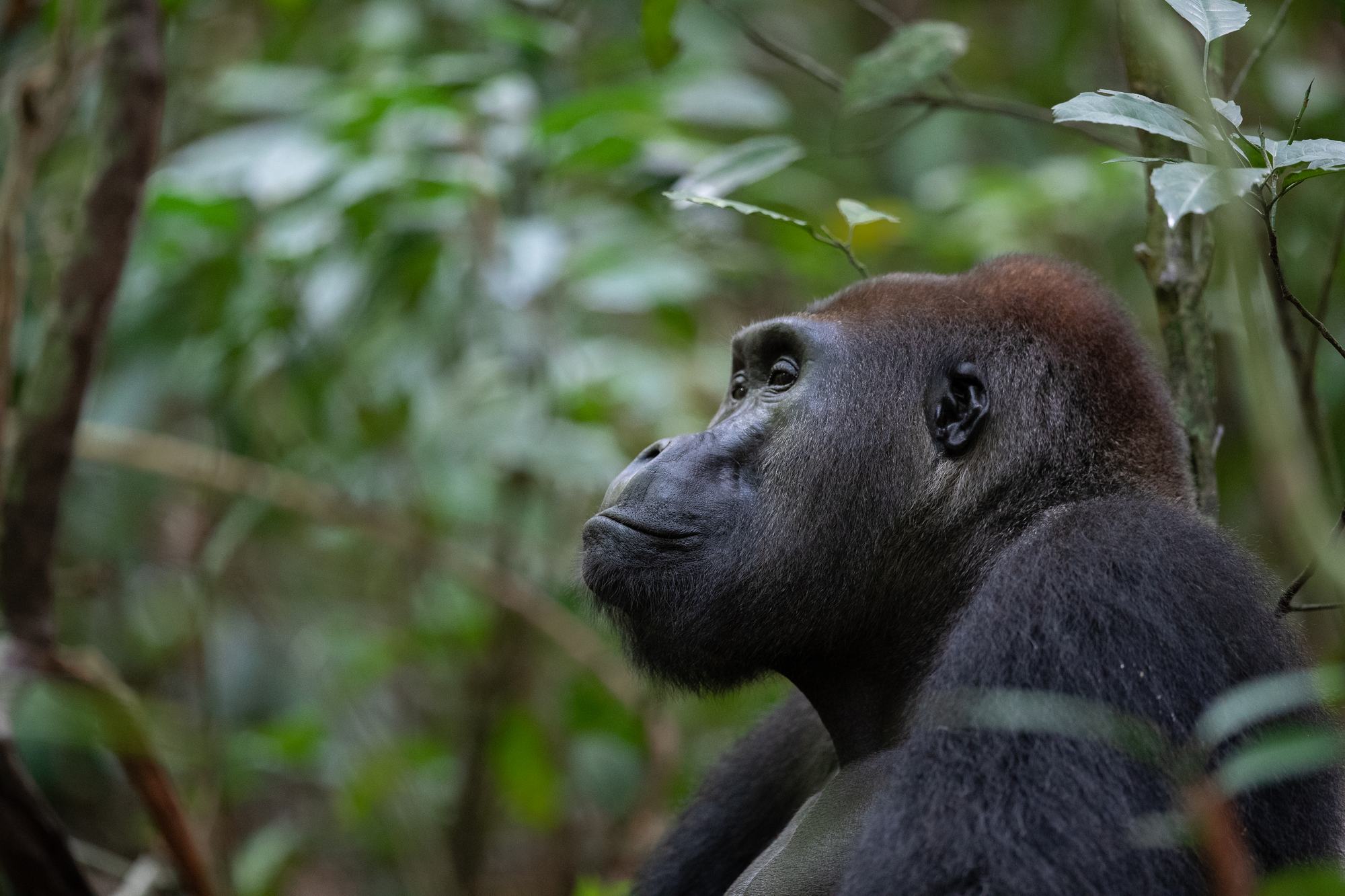
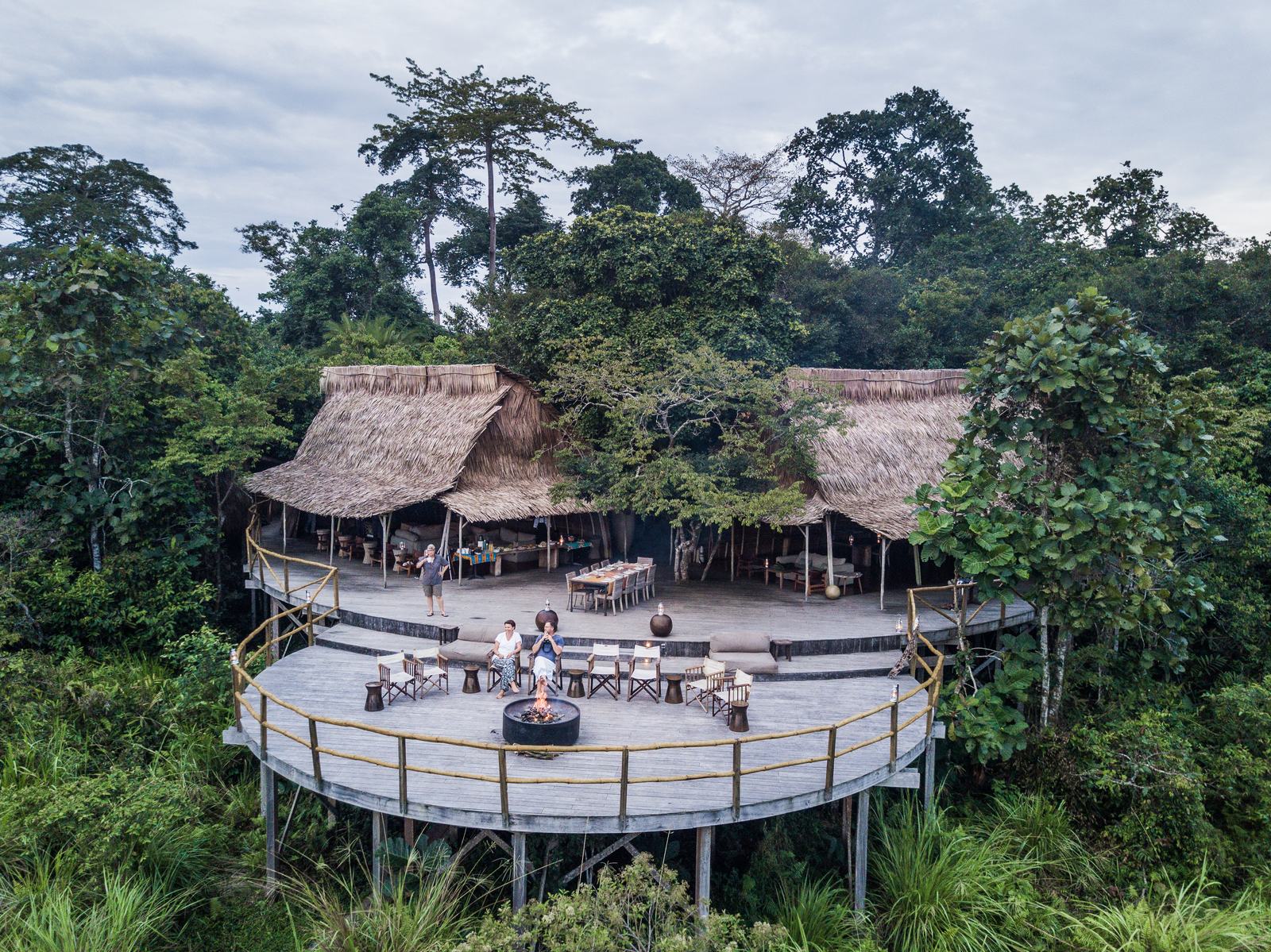
Six raised bungalows among the trees of the Ndzéhi forest concession, beside a world-class western lowland gorilla research programme. Base for gorilla tracking and the canopy walk.
Photographer-led · Small group
Track critically endangered western lowland gorillas in Odzala-Kokoua National Park, Republic of the Congo.
18–25 October 2027 · 7 nights · Hosted by wildlife photographer Amish Chhagan
The destination
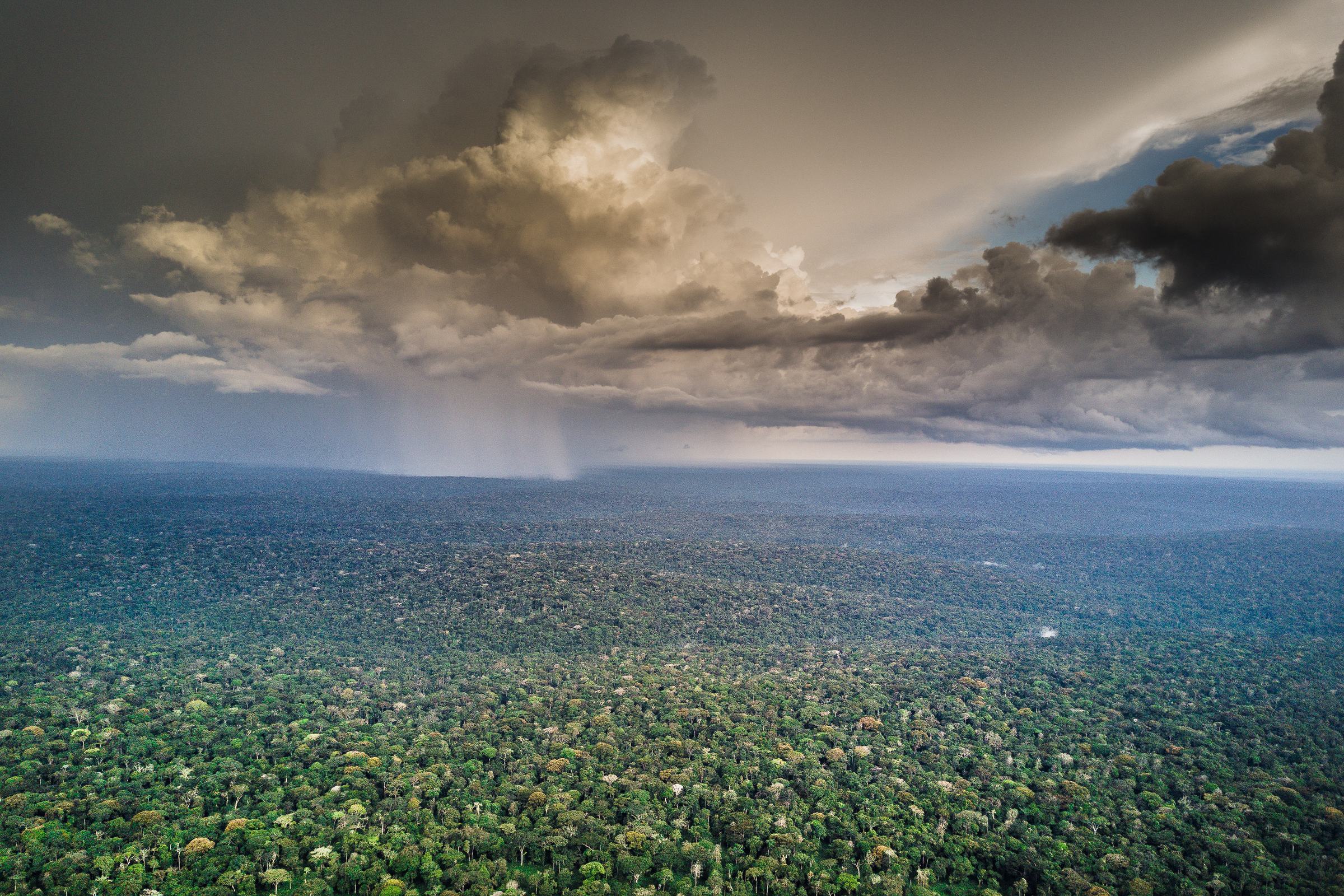
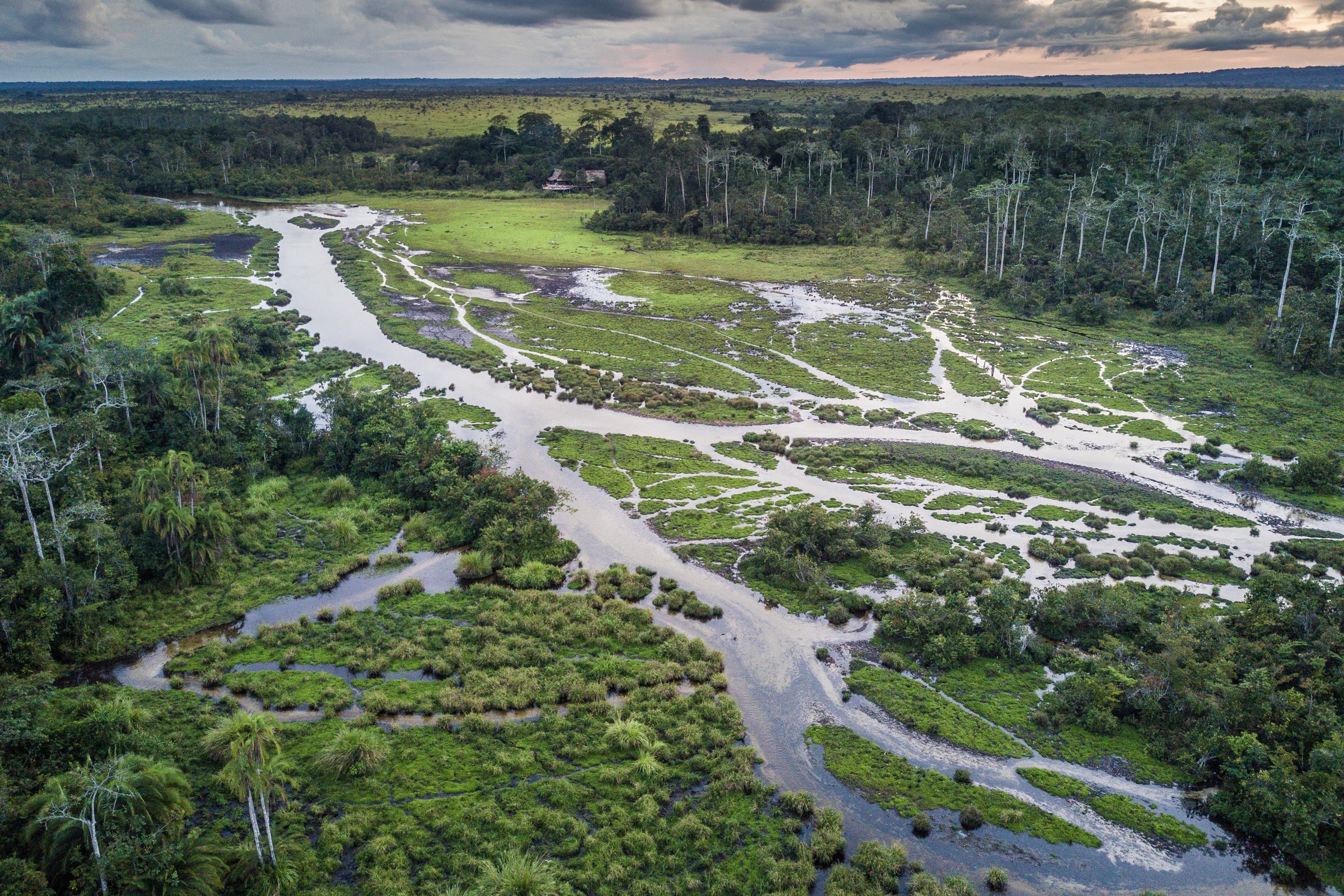
The Congo Basin holds the second-largest rainforest on Earth. In its north-west, Odzala-Kokoua National Park in the Republic of the Congo covers more than 13,500 square kilometres of rainforest, forest clearings and savanna. It was first protected in 1935, making it one of Africa’s oldest national parks, and has been a UNESCO World Heritage Site since 2023.
We stay at the only private lodges in the park, so you are among the very few visitors in an area more than twice the size of Florida’s Everglades National Park. The most thrilling sightings include the western lowland gorilla, chimpanzee, forest elephant, forest buffalo, spotted hyena and bongo – and more than 440 species of bird have been recorded here.
The Republic of the Congo (Congo-Brazzaville) is a different country from the Democratic Republic of the Congo. Odzala-Kokoua lies around two hours’ flight north of the capital, Brazzaville.
4
people at most on each gorilla track
2×
the size of Florida’s Everglades National Park
1935
first protected – one of Africa’s oldest national parks
440+
bird species recorded in Odzala-Kokoua
2023
inscribed as a UNESCO World Heritage Site
Gorilla trekking in the Congo
Unlike the steep volcanic slopes of Rwanda and Uganda, the forest around Ngaga is lowland – around 500 metres above sea level. The gorillas here are active and climb readily, feeding high in the trees, and because so few people visit, their behaviour stays wild.
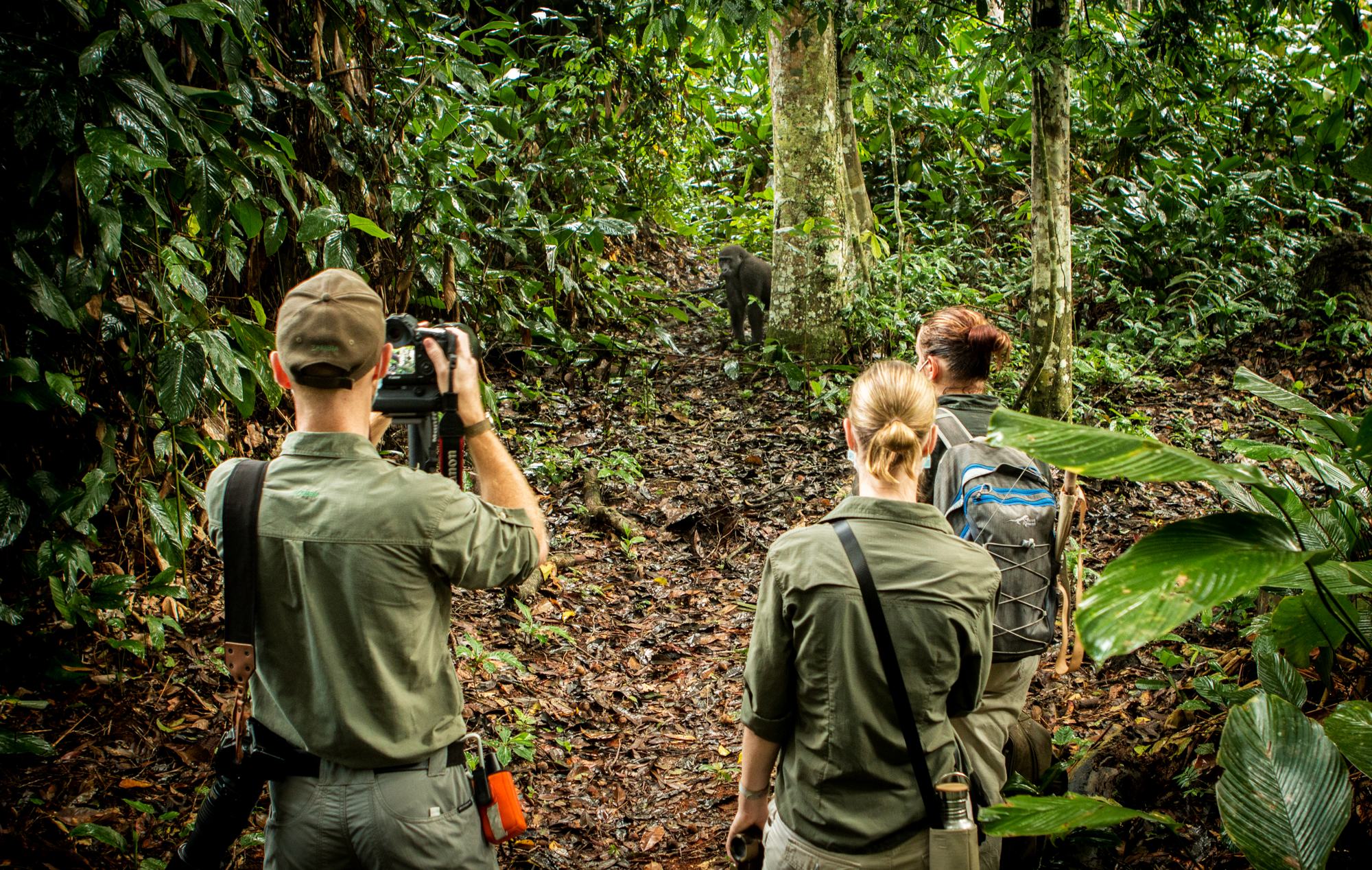
We walk out from the lodge itself with a guide and a senior tracker trained by the Ngaga research team, which has studied these gorilla families for decades. Three habituated groups live within walking distance of the lodge, so an encounter can begin almost on the doorstep.
Want a third gorilla track? Extra permits can be bought at Ngaga Lodge, subject to availability – we’ll plan for it with you in advance.
A different species
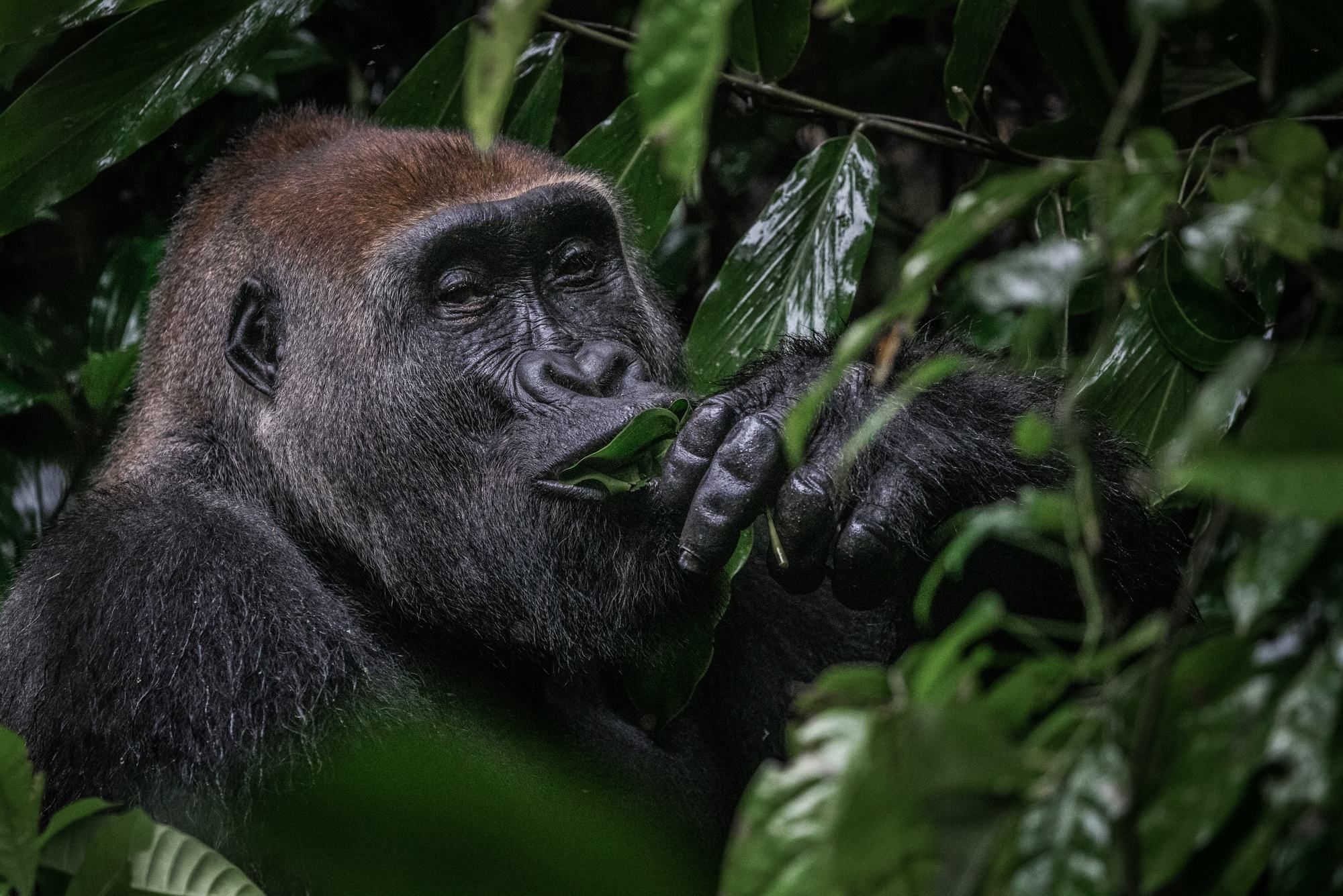
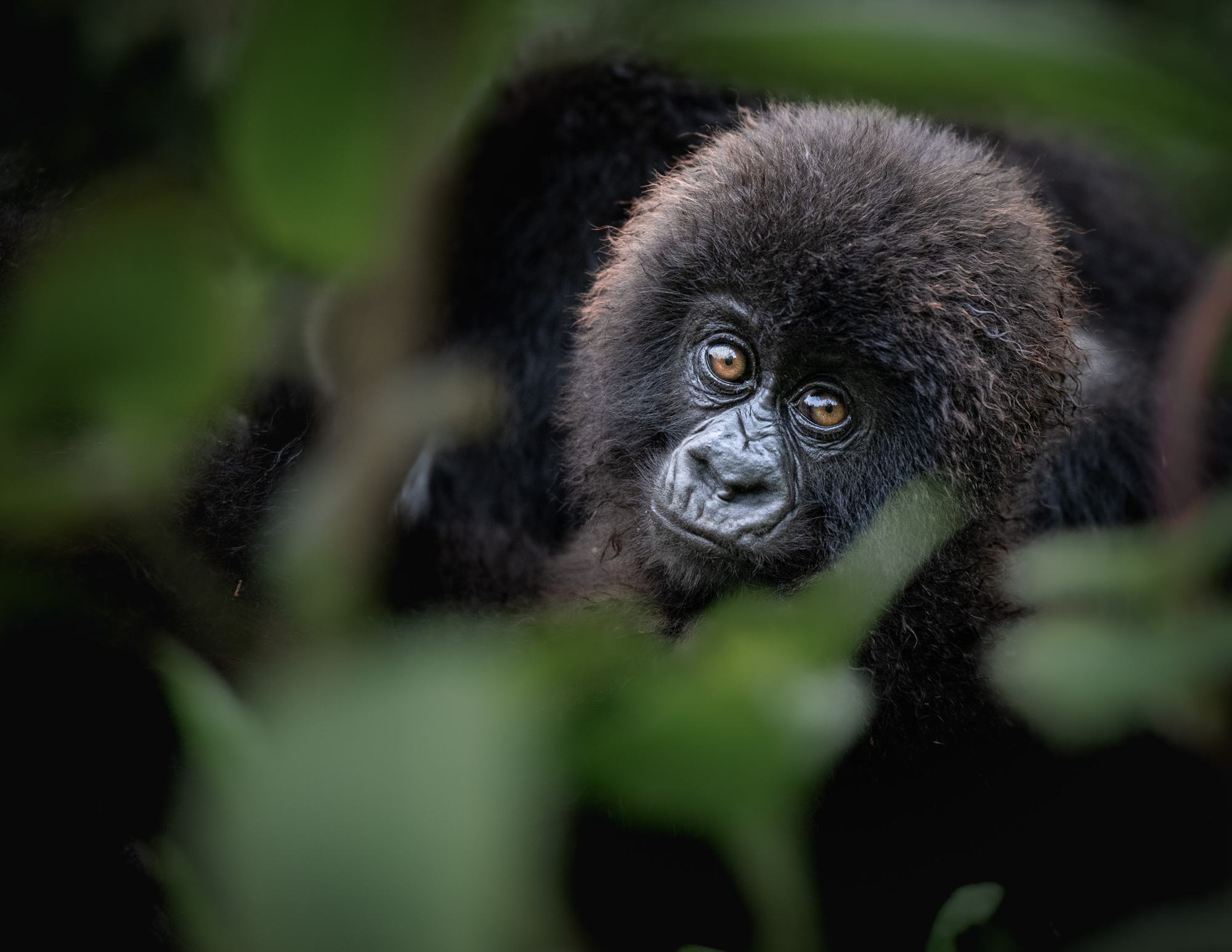
The western lowland gorilla (Gorilla gorilla gorilla) lives only in the rainforests of western Central Africa, from Cameroon and Gabon to the Republic of the Congo. It is a subspecies of the western gorilla – a different species from the mountain gorilla, which is a subspecies of the eastern gorilla.
The smallest of the gorillas, it eats far more fruit than its mountain relatives – and climbs to reach it. At Ngaga you are as likely to find a family feeding high in a fruiting tree, or a youngster swinging down a vine, as foraging on the forest floor. Because so few people visit, these families keep their wild, natural behaviour.
The IUCN Red List classes the western lowland gorilla as Critically Endangered – the highest category of threat before extinction in the wild. Poaching, disease and the loss of forest are the main threats; a 2018 study found numbers falling by about 2.7% a year. In 2002–03, Ebola killed an estimated 5,000 gorillas around the Lossi Sanctuary in north-west Congo – a study led by Dr Magdalena Bermejo, whose research team now works at Ngaga.
An hour with a gorilla family here is a rare privilege: an encounter with one of the most threatened great apes on Earth. Your visit helps protect them. It supports the local forest guardians who patrol the concession and remove snares, and the long-term monitoring of the gorillas.
Critically Endangered: one of the most threatened great apes on Earth – and one of the least seen.
The Endangered Primates Experience
This journey is part of Amish’s Endangered Primates Experience: a series of photographer-led journeys to see the great apes in the wild – gorillas and chimpanzees in the Congo Basin, Uganda and Rwanda, as well as orangutans in Borneo and Sumatra. The western lowland gorilla and all three orangutan species are Critically Endangered.
“I want our children to meet these great apes in the wild, not only in photographs – and I believe the choices we make now will decide whether they can.”Amish Chhagan
Gorilla trekking compared
Gorilla trekking in Rwanda and Uganda means mountain gorillas. The Republic of the Congo is home to the western lowland gorilla. They belong to two different species – the western gorilla and the eastern gorilla – living in different forests, in different ways. This is not a choice between two versions of the same encounter: it is the chance to see the more threatened, and far less visited, of the two.
| Republic of the Congo | Rwanda | Uganda | |
|---|---|---|---|
| The gorilla | |||
| Gorilla | Western lowland gorilla | Mountain gorilla | |
| Species | Western gorilla · Gorilla gorilla gorilla | Eastern gorilla · Gorilla beringei beringei | |
| IUCN Red List | Critically Endangered | Endangered (moved down from Critically Endangered in 2018) | |
| In the wild | Around 360,000 (2018 study) | 1,063 (2018 census) | |
| Population trend | Rapidly declining – down by more than 60% over the last 20 to 25 years | Increasing steadily | |
| Build and coat | The smallest of the gorillas, with shorter fur | Thicker, longer fur for the cold at altitude | |
| Way of life | Eats much more fruit, and climbs readily to feed in the trees | Mostly leaves, shoots and stems; lives mainly on the ground | |
| The trek | |||
| Where | Ngaga, Odzala-Kokoua NP | Volcanoes NP | Bwindi Impenetrable NP |
| Terrain | Lowland rainforest, around 500 m | Volcanic slopes of the Virunga massif | Montane forest, 1,160–2,607 m |
| Guests per group | 4 | 8 | 8 |
| Permit | 2 included in this journey | US$1,500 | US$800 |
Permit prices are the published rates for foreign non-residents at the time of writing. Sources: IUCN Red List; WWF; Strindberg et al., Science Advances (2018); 2018 mountain gorilla census; Rwanda Development Board; Uganda Wildlife Authority.
The itinerary · 18–25 October 2027
Arrive in Brazzaville by Sunday 17 October 2027; we can book your hotel for the night. The days below give a feel for the journey rather than a fixed timetable: the order of the lodges and the timings may change, and each day is shaped around the wildlife, the weather and the light.
01
Day 1 · Mon 18 Oct
A private flight north to Odzala-Kokoua National Park, where your guide meets you at the airstrip and takes you on through savanna and rainforest to Ngaga Lodge, home for three nights.
2–3
Days 2–3 · Tue 19 – Wed 20 Oct
Two gorilla tracks with the research team’s trackers, in groups of no more than four. Between tracks: the canopy walk through the mid-canopy, forest and night walks and, on request, a visit to a nearby village.
04
Day 4 · Thu 21 Oct
A last morning in Ngaga’s forest, then on to Mboko Lodge on the Lékéni River for two nights, where the rainforest opens onto savanna.
05
Day 5 · Fri 22 Oct
Walking, boating and kayaking in search of forest elephants and buffalo, monkeys, hippo and the shy bongo. Sundowners on the river deck.
06
Day 6 · Sat 23 Oct
On to Lango Lodge for two nights, overlooking a mineral-rich clearing where forest elephants and buffalo come to feed.
07
Day 7 · Sun 24 Oct
Wading the baï and forest streams in the footsteps of forest elephants. Forest buffalo graze the clearing, green pigeons come in to roost and, with luck, a bongo steps out or chimpanzees call in the distance.
08
Day 8 · Mon 25 Oct
The private flight back to Brazzaville lands around 11:00, in time for international flights leaving from 16:00 onwards.
Getting there
Like all our safaris, this is designed so there is nothing for you to worry about. From the moment you land in Brazzaville, you are met and looked after.
01
We provide your letter of invitation for the Republic of the Congo, and a pre-departure pack with clear guidance on your visa, vaccinations and medical form.
02
You are met at Maya-Maya International Airport and taken to your hotel for the night, which we can book for you.
03
A private flight on a twin-engine aircraft takes you north to Odzala-Kokoua in about two hours. Your guide meets you at the airstrip, and from there you travel by 4x4, boat, kayak and on foot.
04
The same private flight lands back in Brazzaville around 11:00, in time for international flights leaving from 16:00 onwards.
Where you stay
Each lodge has just six rooms, so the forest never feels crowded. We move between them by road, river and on foot.
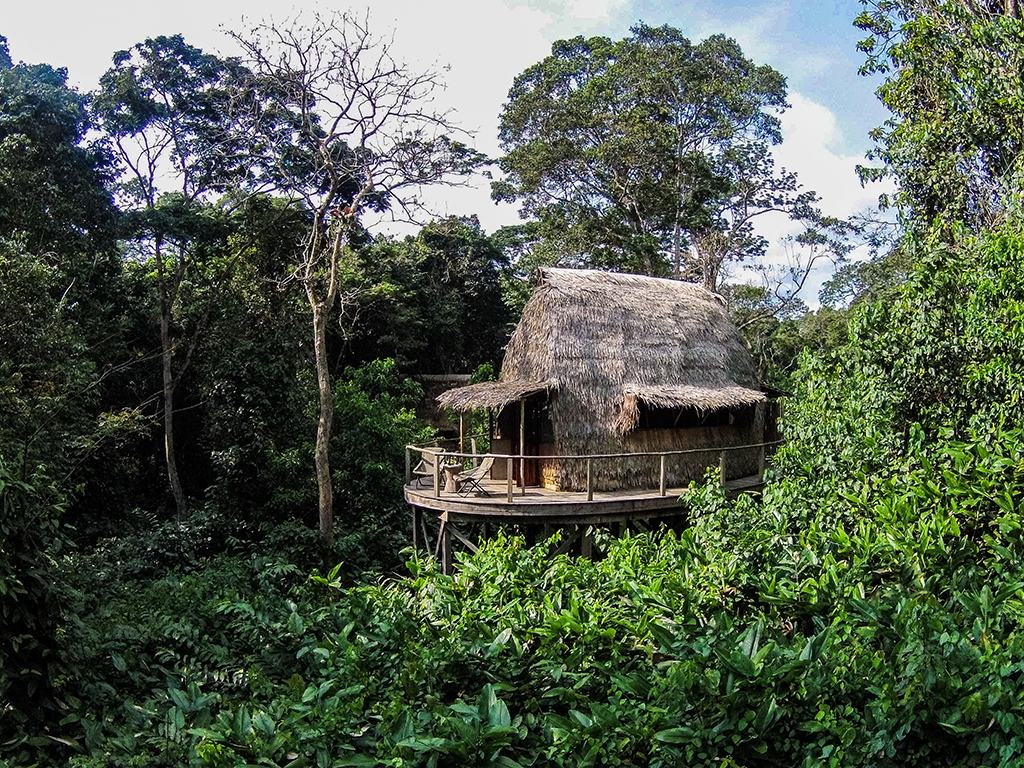
3 nights · Rainforest
Six raised bungalows among the trees of the Ndzéhi forest concession, beside a world-class western lowland gorilla research programme. Base for gorilla tracking and the canopy walk.
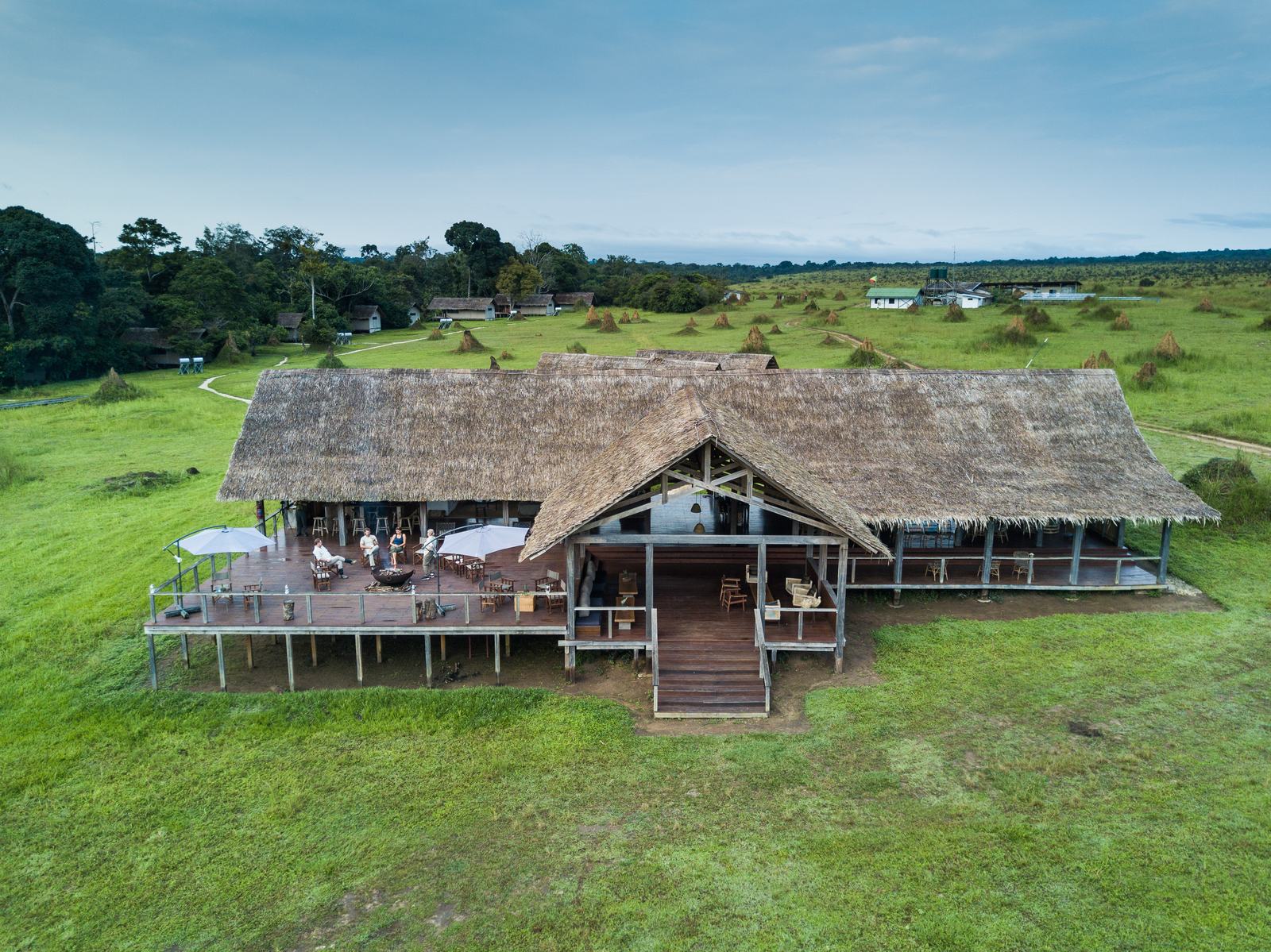
2 nights · Savanna and river
Six river-front canvas bungalows where the forest meets open savanna. Kayaking, boating and walking – and massage at the Mboko spa.
2 nights · Forest baï
Six stilted rooms overlooking Lango Baï, a mineral-rich clearing visited by forest elephants and buffalo.
Please note: the number of nights at each lodge and the order in which we visit them may change.
Wildlife of the Congo Basin
Odzala-Kokoua shelters some of the rarest large mammals in Africa – most of them adapted, like the gorillas, to life inside the forest.
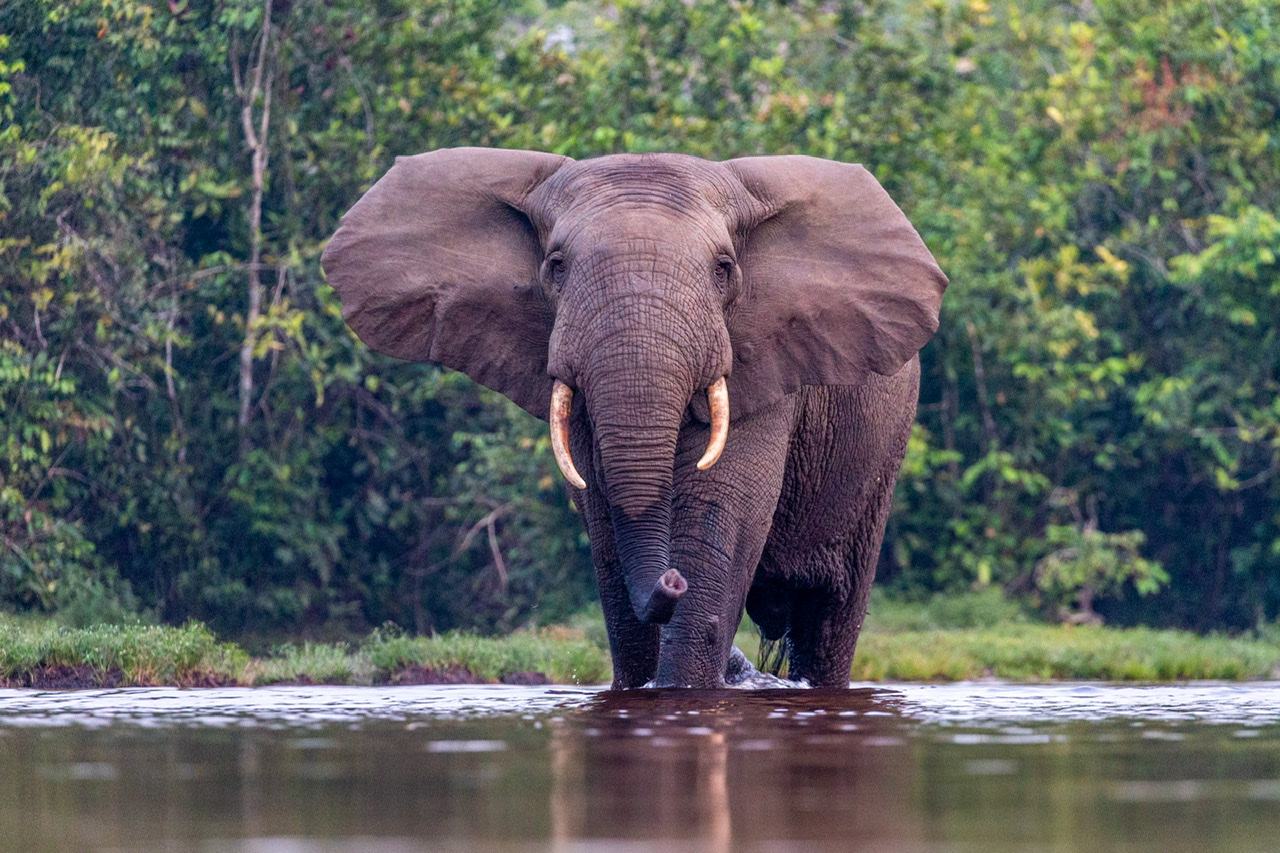
Not the savanna elephant of southern and eastern Africa, but a separate, smaller species – with rounder ears and straighter, downward-pointing tusks.
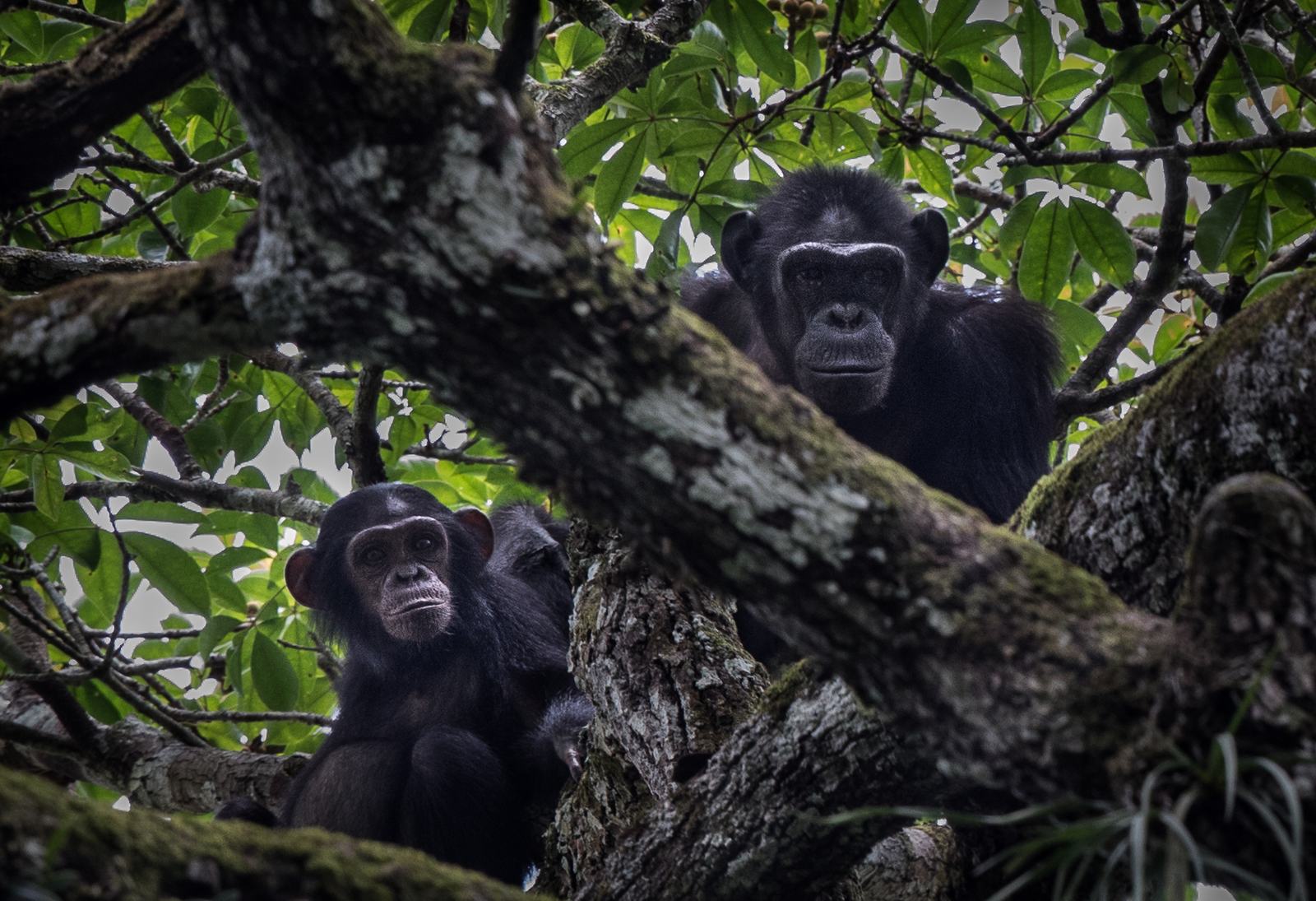
Our closest living relatives. Often heard before they are seen, their calls carry through the canopy.
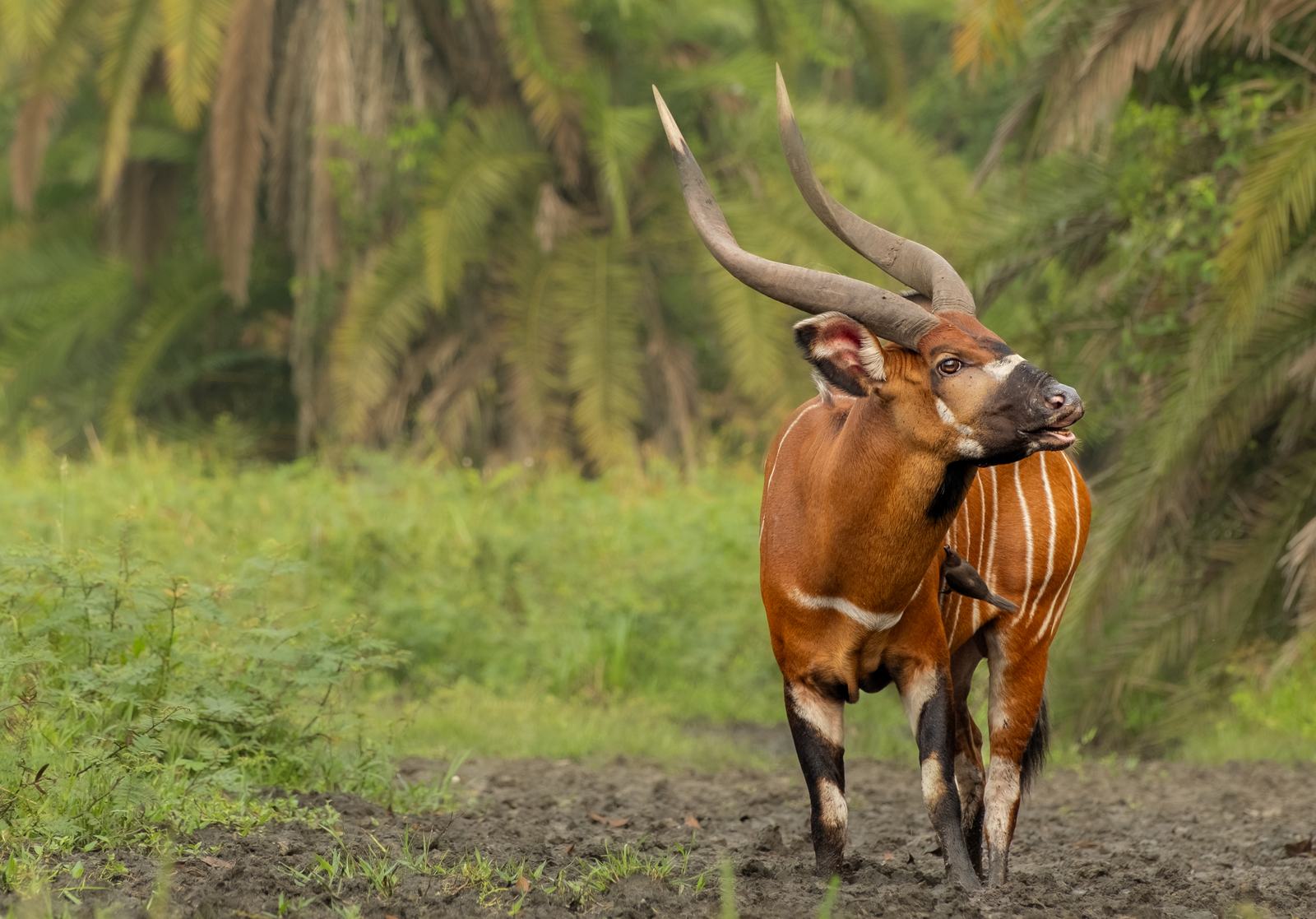
The largest forest antelope, striped and famously shy – a rare reward for patience.
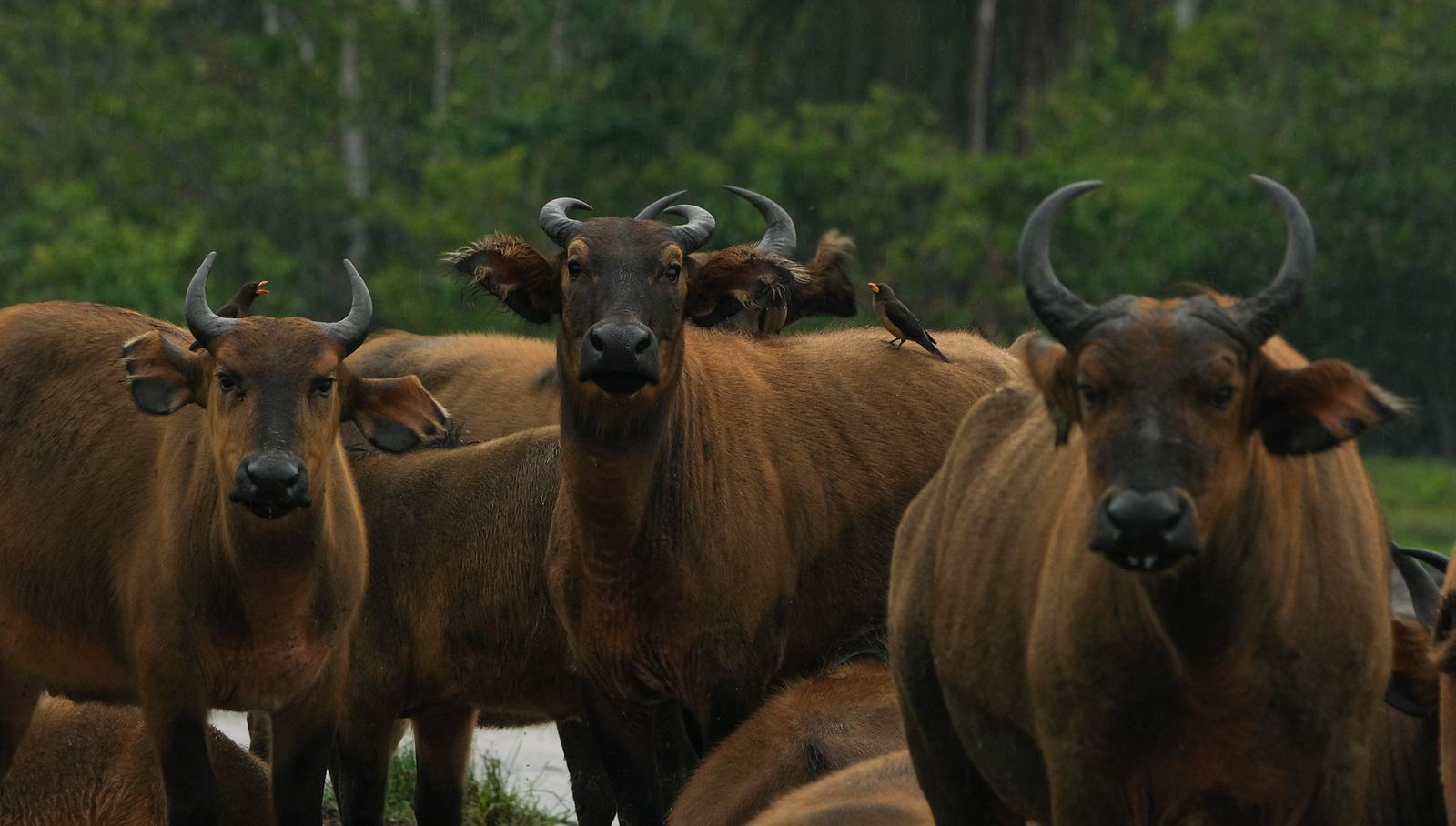
Smaller and redder than the buffalo of the savanna, grazing the baïs and grasslands in small herds.
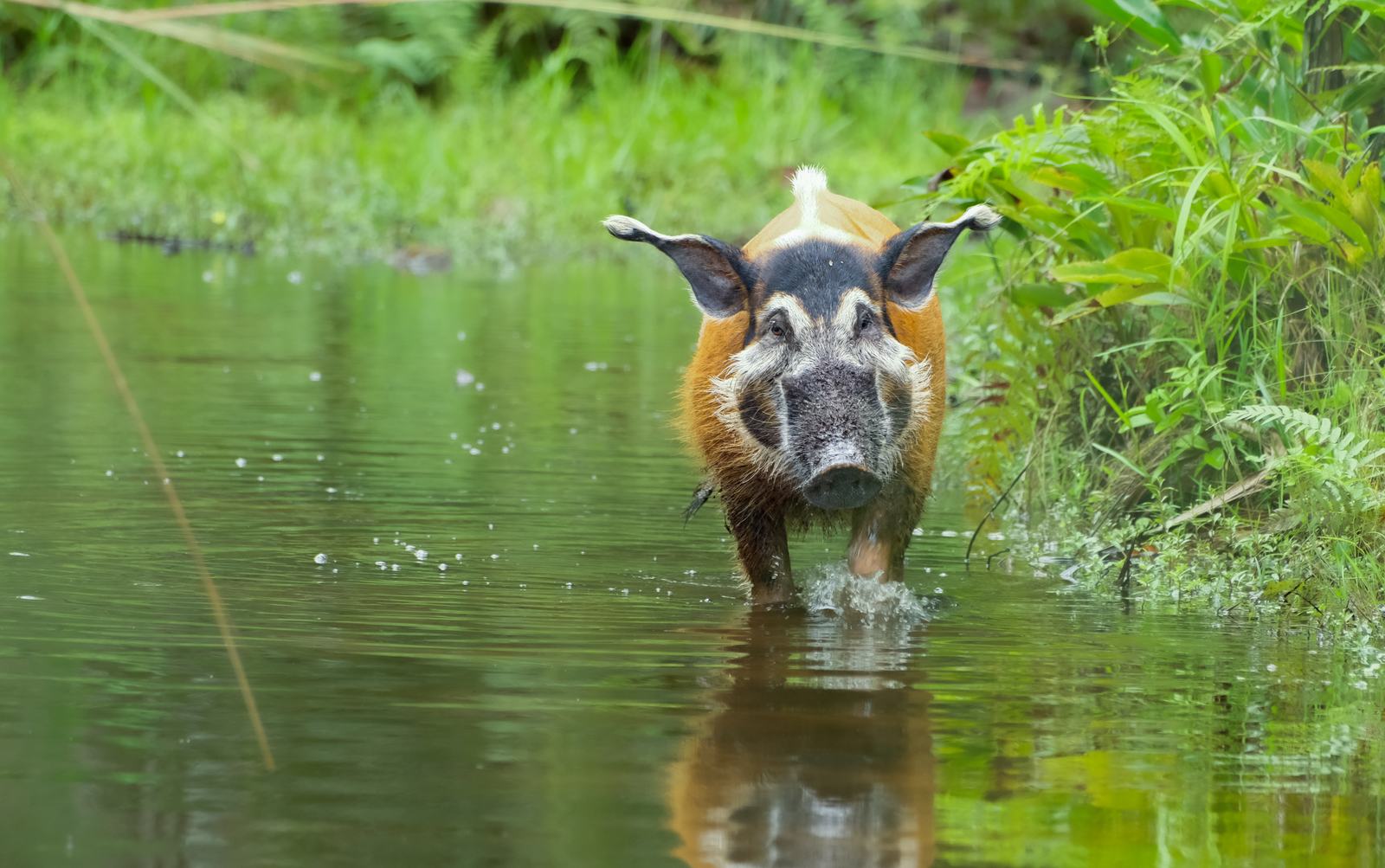
Russet coat, white-tufted ears – a forest pig often seen wading streams and the edges of the baïs.
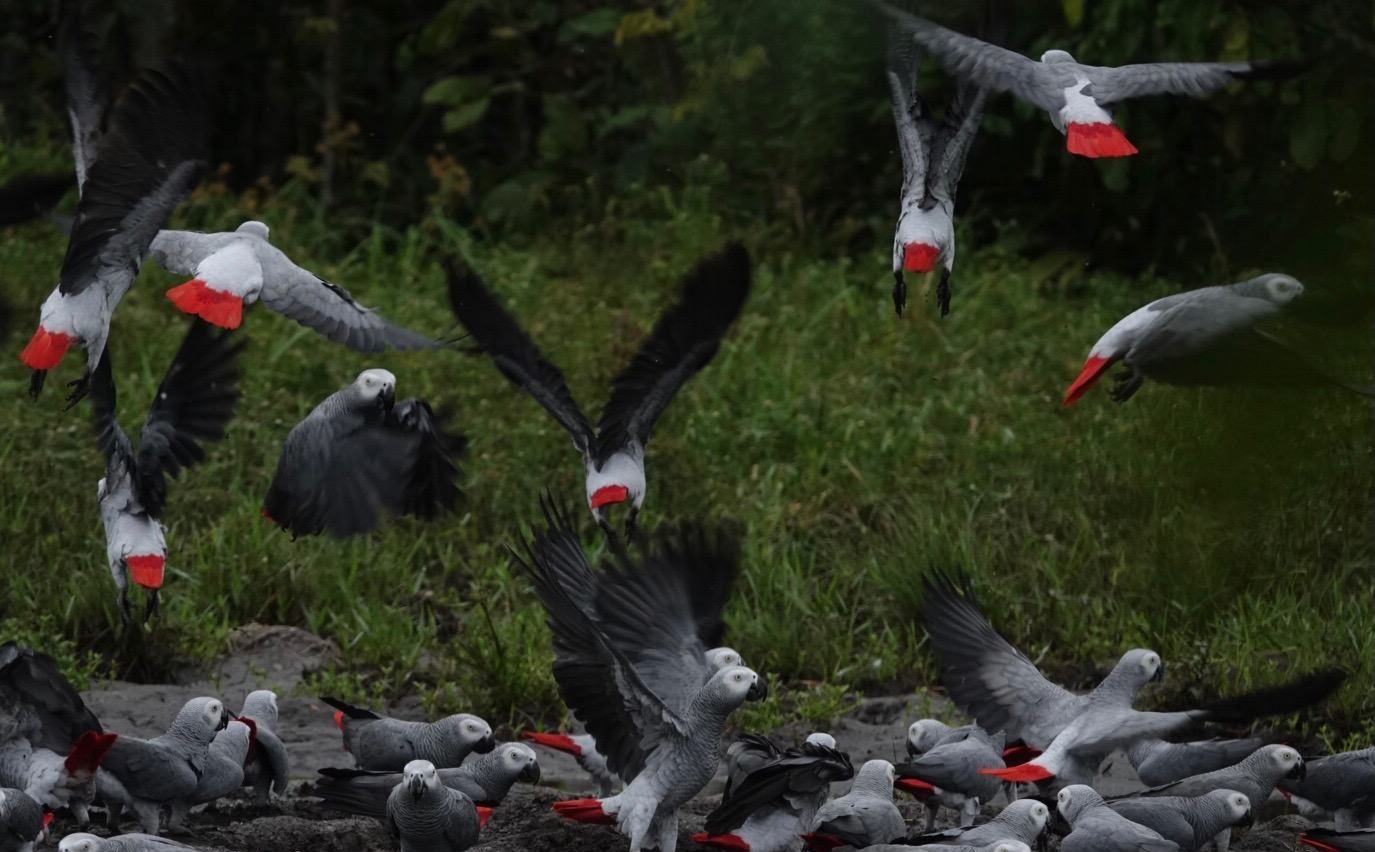
Flocks come down to the baïs to feed on the mineral-rich soil – a flash of red tails against the grey.
Also possible: spotted hyena, moustached monkey, hippo, giant forest hog, rare duikers, slender-snouted crocodile and a whole nocturnal world on night walks.
Conservation status on the IUCN Red List: African forest elephant, Critically Endangered · chimpanzee and grey parrot, Endangered · bongo, Near Threatened.
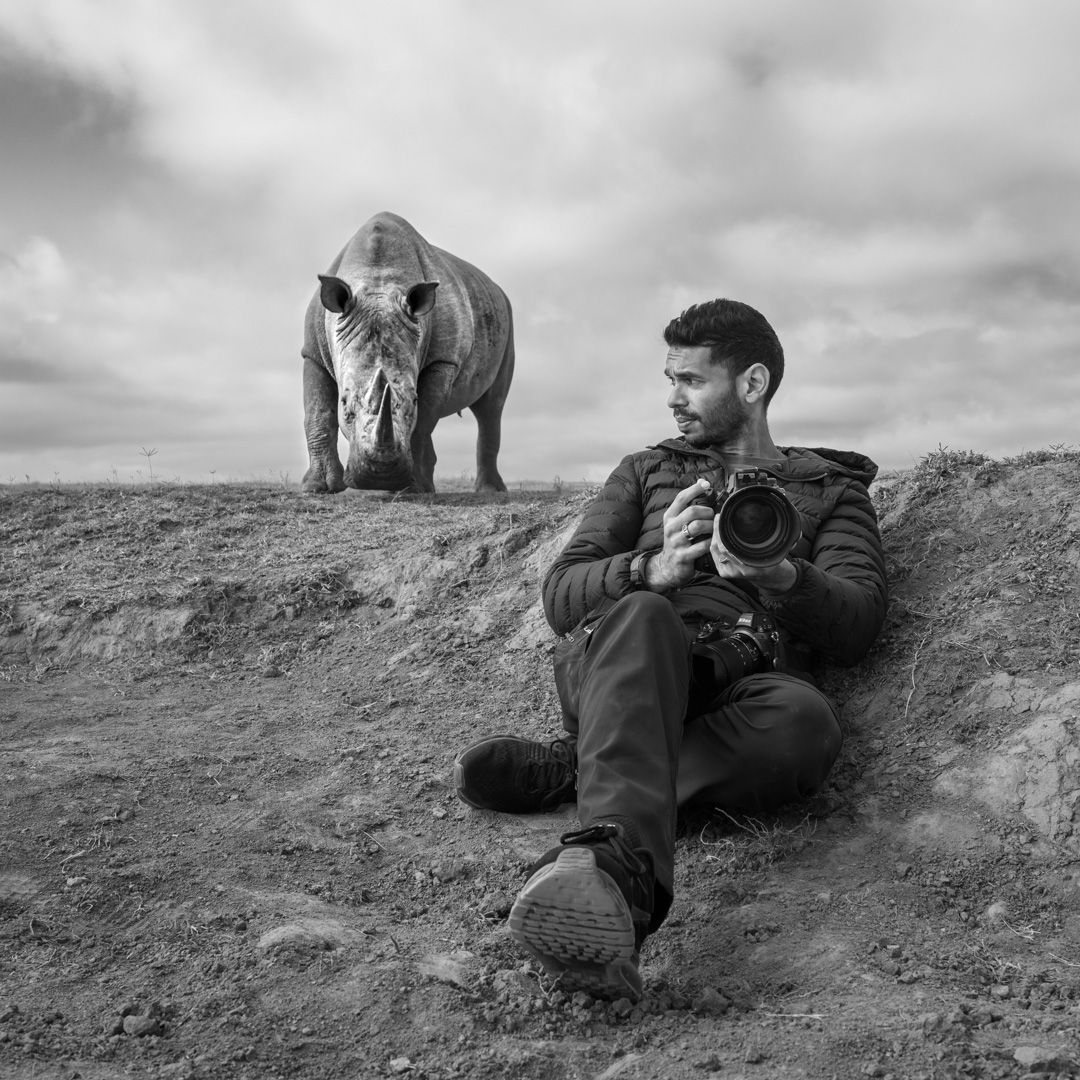
Your host
Amish grew up in Zambia and has spent his life in African wilderness. A wildlife and conservation photographer and a Nikon MEA Creator, his work has been published by National Geographic, GEO and WWF's World Wildlife magazine, amongst other publications. He hosts this departure himself in Odzala-Kokoua.
Increasingly, Amish is turning his lens to Africa’s great apes and other large primates – and bringing people with him. He wants them to witness these animals for themselves, and the forests they depend on, and to feel what he feels in their presence. Their numbers are falling fast. Every guest who has looked a gorilla in the eye carries that story home, and every visit helps support the people protecting this ecosystem.





“Once you have sat in the forest with a gorilla family, you never see them as a statistic again. That is why I bring people here.”
In the field, Amish reads the light and the animals, and helps you position for the strongest photograph – settings, lenses and composition – with relaxed editing sessions back at the lodges.
No camera needed. A host who knows the forest’s rhythms and will help you slow down and simply be present with the gorillas.
Amish photographs the journey throughout, and every guest receives a curated digital gallery. Fine art prints are available on request.
Included
Not included
Price: from US$15,100 per person sharing; single supplement on request.
Questions
Yes. The Republic of the Congo, also called Congo-Brazzaville, is a separate country from its larger neighbour, the Democratic Republic of the Congo. Odzala-Kokoua lies in the remote north-west, and from the moment you land you are met and looked after, with every transfer arranged for you.
Any time of year. Odzala-Kokoua lies close to the equator, so it stays warm – around 25–28°C – with some rain in every month, and the gorillas, forest elephants and buffalo do not migrate. This departure runs 18–25 October 2027.
No. The pace follows the light and the wildlife, which suits everyone. Amish photographs the journey, so you can leave the camera in your bag whenever you like – and every guest receives a curated digital gallery.
Three small lodges with six rooms each, all en-suite with hot water. They are comfortable rather than showy: fans and mosquito nets instead of air-conditioning, same-day laundry, and satellite Wi-Fi in the main areas for messages. Special diets are catered for with advance notice.
Yes – from US$15,100 per person sharing a double or twin room. Solo travellers are welcome, with a single supplement.
Yes, it is a condition of booking. Your policy must cover medical evacuation, trip interruption and cancellation for any reason.
They belong to two different species. Western lowland gorillas (a subspecies of the western gorilla) live in the lowland rainforests of western Central Africa; mountain gorillas (a subspecies of the eastern gorilla) live only in the Virunga volcanoes and Bwindi, across Rwanda, Uganda and the DRC. Lowland gorillas are smaller, eat more fruit and spend more time in the trees. They are Critically Endangered; mountain gorillas, 1,063 at the last census, are Endangered.
No. Mountain gorillas live only in Rwanda, Uganda and the DRC. Ask us about a separate journey to see them.
Two tracks are included, each led by a guide and a tracker. Each track is limited to four people, and the research station at Ngaga issues no more than twelve permits a day. In a larger party, Amish joins each small group for at least one of its tracks. A third track can be added, subject to availability.
Reasonably fit: comfortable walking unassisted for a couple of hours at a time, over uneven ground and sometimes through streams. Tracks range from 1 to 8 km at an unhurried pace, with plenty of time to relax at the lodges in between. The minimum age is 15, with no exceptions.
Possibly. Chimpanzees live in these forests, but there are no dedicated chimpanzee treks and they are shy, so a sighting on a forest walk or drive is a bonus rather than a promise.
Fly into Maya-Maya airport in Brazzaville (BZV), arriving by Sunday 17 October – Air France, Ethiopian Airlines, Royal Air Maroc and RwandAir all fly there. We can book your hotel for the night, and the next day a private flight takes you to the park in about two hours. On the last day you land back in Brazzaville around 11:00, so book onward flights leaving from 16:00.
Yes. You can apply at a Republic of the Congo embassy or consulate 30–45 days before you travel, using the letter of invitation we provide. Or we can arrange a visa on arrival for you, currently US$200 per person (subject to change), with at least six weeks’ notice.
A passport valid for at least six months after arrival, with two blank pages; your visa; and a yellow fever vaccination certificate, which is checked when you land. Gorilla tracking also needs a medical declaration signed by your doctor, and antimalarials are recommended. We send clear guidance on each step; arranging them is up to each guest.
15 kg per person on the flight into the park, including hand luggage and cameras, packed in a soft bag. Extra weight may be possible if booked in advance, at a charge. We send a packing list and a camera kit list before you travel.
One departure: 18–25 October 2027. Small group, limited places. When you enquire, please tell us how many people are travelling.
Photography on this page: Andrew Howard, Dylan Smith, James Kydd, Jonathan Perugia, Scott Ramsay and Ngaga Lodge. Mountain gorilla and portraits: Chags Photography.
The newsletter